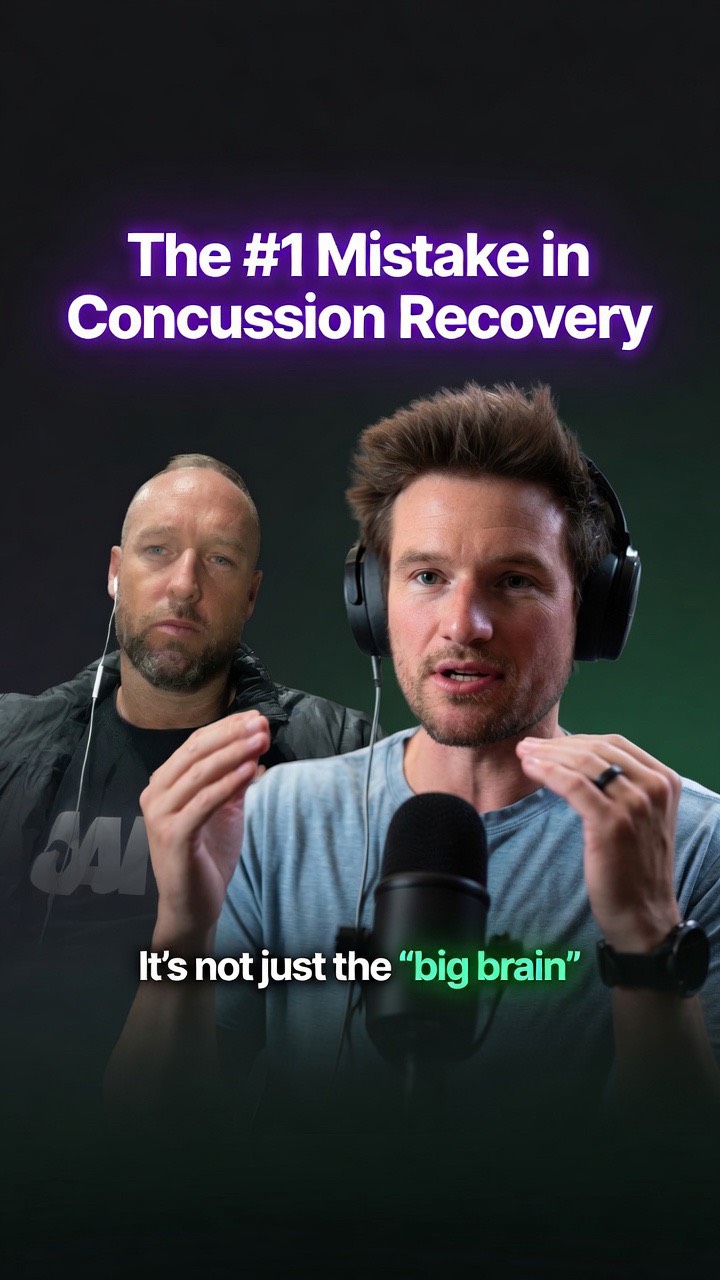
Most people only treat the “big brain” after a concussion…
25 Jun 2026 · preview · M2MMA · via M2MMA

Summary
Most people only treat the “big brain” after a concussion… But according to @i.a.f.n.r member Dr. Ryan Cedermark, that’s often why athletes stay stuck for months. Functional neurology looks at the whole nervous system — brainstem, cerebellum, autonomic system, and more. This is…
Caption
Most people only treat the “big brain” after a concussion…

But according to @i.a.f.n.r member Dr. Ryan Cedermark, that’s often why athletes stay stuck for months.

Functional neurology looks at the whole nervous system — brainstem, cerebellum, autonomic system, and more.

This is the missing piece in concussion recovery for combat sports athletes.

🎙️ Full conversation on the M2MMA Podcast on the @m2mmaofficial YouTube Channel.

M2MMA is proud to have partnered with @i.a.f.n.r to improve athlete access to expert brain health and performance care.

What’s one thing you wish you knew earlier about brain recovery? 👇

#FunctionalNeurology #ConcussionRecovery #CombatSports #BrainHealth #M2MMA FighterPerformance
Transcript (instagram_whisper)
And I think that is where the differences in functional neurological applications in
terms of rehabilitation of symptoms.
And the reason for that is when you really start to learn the way that the nervous system
develops and it grows and the way that it communicates, so the way the brain and the
balance centers or the sensory brain talks to the brainstem, when you start to learn those
communication pathways, you can assess and evaluate a patient and determine, even though
we have all these symptoms that the patient is complaining about or these physical deficits
that they're presenting with, you can assess them to look at what systems are broken down
from this specific injury, like where in the nervous system are things not working.
And even though they have all these symptoms, if they don't line up, where do we start
heart therapies to help build those systems back up. And a lot of times in
concussion, the evaluation is mostly based on the higher executive function
areas of the brain, kind of like the frontal lobe, the bigger part of our
brain. But people aren't really assessing the autonomic system, the
survival system, which is your brainstem. There's not in-depth look at the
cerebellum or the balance center, which plays a role in cognition and
attention and all that stuff. So I think learning the lens to look through and to
evaluate the patient can completely change the trajectory of someone's
symptoms no matter how bad the concussion is.